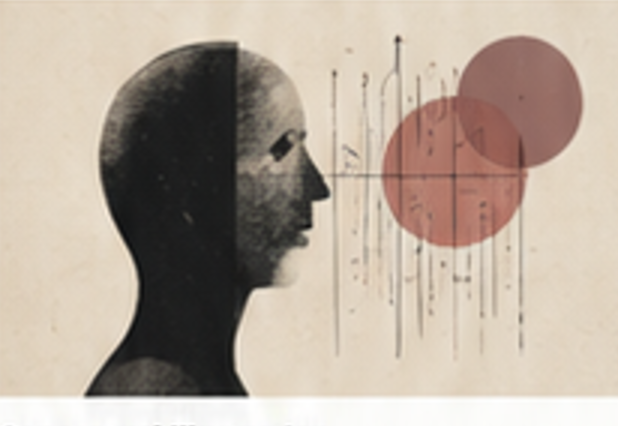
Rationality has a reputation problem. Say the word and people picture a spreadsheet, a cold calculation, someone who has never once ordered dessert. That picture is wrong in an interesting way. Reason, as humans practise it, is a social and rather warm activity: it is the habit of giving reasons to one another, and of being moved by a good one when we hear it.
The alternative picture — the lone calculator of expected utility — was never a description of anyone. It was a convenient fiction for building models, and it earned its keep for a century. But a fiction that is useful in a model can be corrosive when it becomes a standard for judging people. Measured against the calculator, everyone fails, and failure stops being informative.
Reason as a shared tool
A better starting point is to ask what reasoning is for. The evolutionary answer, increasingly well supported, is that we reason chiefly to persuade and to evaluate persuasion. Alone, we are lazy and biased thinkers; in argument with someone who disagrees, we become sharp. That explains a great deal that the calculator cannot — why we are so much better at spotting flaws in other people's reasoning than in our own, for instance, and why deliberation in small groups so often beats the cleverest individual.
This journal takes that view seriously. We will publish economics, psychology and the occasional piece of honest data, but the underlying project is the same in every essay: to understand people as they are, and to treat that understanding as the first, not the last, step towards helping them decide well.